The Hybrid Fintech Professional: Bridging Finance and Code in Hong Kong
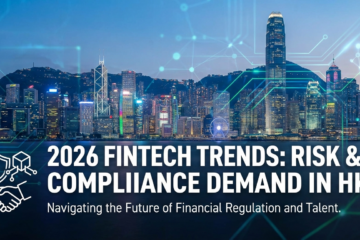
The skyline of Hong Kong has long been a global symbol of traditional financial might. For decades, the towering skyscrapers of Central and Admiralty housed thousands of professionals who spoke the language of equities, bonds, risk assessment, and capital allocation. However, as we navigate through 2026, the conversations echoing in these boardrooms have fundamentally changed. Today, the dialogue seamlessly transitions from quantitative easing to quantum computing, from portfolio diversification to Python scripts, and from regulatory compliance to smart contract deployment.
This dramatic shift has given rise to a new, highly sought-after archetype in the workforce: the Hybrid Fintech Professional. No longer is it sufficient to rely solely on isolated IT departments to execute the vision of financial strategists. The modern financial landscape in Hong Kong demands a unified mindset—individuals who are as comfortable building a machine learning model as they are analyzing a corporate balance sheet.
The Evolution of the Hong Kong Financial Hub
Hong Kong’s transformation into a premier fintech hub hasn’t happened overnight. It is the result of years of concerted effort by the Hong Kong Monetary Authority (HKMA), progressive regulatory frameworks, and a massive influx of venture capital aimed at digitizing financial services. Over the last few years, the push for Virtual Asset Service Provider (VASP) licensing, the integration of the e-HKD, and the maturation of digital wealth management platforms have dissolved the barriers between finance and technology.
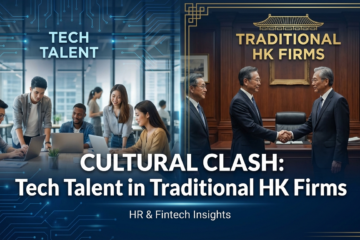
In the past, financial institutions operated in silos. Quants and analysts developed the financial logic, while software engineers translated that logic into code. This translation process was often fraught with friction, miscommunication, and agonizingly slow deployment cycles. In 2026, the velocity of the market simply does not allow for this disjointed approach. The solution is the hybrid professional—a single entity capable of conceptualizing a financial product and writing the code to bring it to life.
What Defines a Hybrid Fintech Professional?
A hybrid fintech professional is not merely a banker who knows a bit of HTML, nor a software developer who casually trades stocks on the weekend. They represent a deep, synthesized mastery of two complex domains.
Fluency in Financial Principles
These professionals possess a rigorous understanding of market mechanics. They understand macroeconomic indicators, derivatives pricing, risk management frameworks (such as Basel III and IV), and corporate valuation. They can engage in deep strategic discussions with portfolio managers and C-suite executives, understanding the why behind a financial maneuver before figuring out the how.
Mastery of Modern Technology
Equally important is their technical prowess. Hybrid professionals are fluent in languages like Python, Go, C++, and Rust. They are adept at working with big data frameworks, utilizing cloud architecture (AWS, Azure, GCP), and increasingly, deploying decentralized applications (dApps) using Solidity or Rust on blockchain networks. They don’t just write scripts; they build scalable, secure, and highly optimized financial systems.
Why Hong Kong’s Institutions Demand Hybrid Talent in 2026
The demand for these polymaths in Hong Kong is skyrocketing. Traditional banks, aggressive hedge funds, and agile fintech startups are all competing for a very limited pool of this specialized talent. Several key drivers are fueling this hiring frenzy.
Accelerating Regulatory Technology (RegTech)
The regulatory environment in Hong Kong and across Asia is becoming increasingly stringent and complex. Financial institutions are leveraging RegTech to automate compliance, monitor transactions for anti-money laundering (AML) purposes, and ensure data privacy. Building these systems requires a nuanced understanding of both the legal/compliance requirements and the machine learning algorithms capable of detecting anomalous patterns in real-time. Hybrid professionals bridge this gap perfectly.
The Ascendance of Decentralized Finance (DeFi) and Web3
Hong Kong has aggressively positioned itself as a global capital for Web3 and digital assets. With the institutionalization of crypto and the tokenization of real-world assets (RWA), firms are building proprietary trading desks for digital assets and launching tokenized funds. Navigating this space requires professionals who understand the financial implications of tokenomics and the technical realities of blockchain consensus mechanisms and smart contract security.
Data-Driven Decision Making at Scale
Alpha is no longer found through intuition alone; it is extracted from massive, unstructured datasets. Alternative data—ranging from satellite imagery to social media sentiment and supply chain logistics—is being ingested at unprecedented rates. Hybrid professionals can write the code to scrape, clean, and analyze this data, while simultaneously applying financial logic to determine its actionable value in the market.
Challenges in Cultivating and Sourcing Hybrid Talent
Despite the high demand, finding hybrid fintech professionals in Hong Kong remains a significant challenge. Traditional university curricula still largely separate computer science from finance and economics. Consequently, most hybrid professionals are self-taught in their secondary domain. They are often former software engineers who earned a CFA charter, or former investment bankers who completed intensive coding bootcamps and committed to technical mastery.
This scarcity creates a hyper-competitive recruitment environment. Firms are finding that standard compensation packages and traditional recruitment channels are insufficient to attract these individuals. Hybrid professionals seek cultures of innovation, modern tech stacks, flat hierarchies, and the autonomy to build impactful solutions. They evaluate prospective employers not just on salary, but on the sophistication of their codebase and the strategic vision of their leadership.
How Alpha HR Navigates the Fintech Talent Landscape
At Alpha HR, we understand that recruiting for the financial sector in 2026 requires a highly specialized approach. We are not just matching keywords on a resume; we are assessing complex technical repositories alongside financial track records.
Our team possesses the deep industry knowledge necessary to evaluate the true depth of a candidate’s hybrid capabilities. We know the difference between a candidate who can write a basic Python script and one who can engineer a low-latency trading algorithm. We maintain extensive, active networks within Hong Kong’s most innovative tech communities, blockchain developer hubs, and top-tier financial institutions. By speaking both the language of code and the language of capital, Alpha HR is uniquely positioned to identify, engage, and secure the rare talent that will drive your firm’s future.
The Future Outlook: Adapt or Fall Behind
As we look beyond 2026, the hybridization of finance and technology in Hong Kong will only accelerate. The professionals who can seamlessly integrate financial theory with engineering execution will become the primary architects of the global financial system. Firms that successfully attract and empower this talent will gain an insurmountable competitive advantage, while those clinging to siloed, traditional structures will inevitably face obsolescence.
The future of finance is being written in code. Ensure your team has the experts who can write it.
Are you ready to build the future of finance?
Whether you are a financial institution seeking transformative hybrid talent, or a skilled professional looking to make your mark in Hong Kong’s dynamic fintech sector, Alpha HR is your strategic partner.
[Contact Alpha HR today] to discover how our specialized recruitment strategies can connect you with the visionaries at the intersection of finance and technology.