The Roots of the Cultural Disconnect
Hong Kong’s business landscape in 2026 is defined by a paradoxical mandate: preserve the foundational stability that built the city’s economic legacy, while simultaneously accelerating digital transformation to remain globally competitive. From legacy financial institutions in Central to generational logistics conglomerates in Kwai Chung, traditional enterprises are aggressively recruiting top-tier tech talent. Software engineers, AI specialists, data scientists, and agile product managers are being brought in to modernize outdated systems, automate operations, and drive innovation.
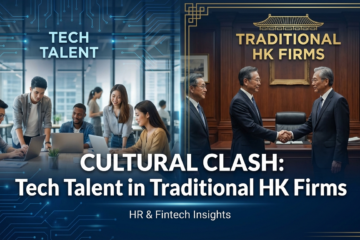
However, recruitment is only the first hurdle. The true challenge—and the primary reason many digital initiatives stall—is the profound cultural clash that occurs when Silicon Valley-inspired work styles collide with traditional, hierarchical corporate environments.
For HR leaders and executives, managing this cultural friction is no longer just an employee engagement issue; it is a critical business imperative. Understanding the roots of this disconnect is the first step toward building a cohesive, future-ready organization.
The Roots of the Cultural Disconnect
The friction between tech talent and traditional Hong Kong firms rarely stems from a lack of technical capability. Instead, it is born from fundamentally different views on how work should be structured, evaluated, and executed.
Agility vs. Hierarchy
Tech professionals are accustomed to flat organizational structures. They thrive in environments that empower individual contributors, prioritize rapid iteration, and encourage decentralized decision-making. If an engineer spots a system vulnerability or a product manager identifies a market opportunity, the expectation is that they can pivot immediately to address it.
In contrast, traditional Hong Kong enterprises are often characterized by steep hierarchies and rigid, multi-layered approval processes. Decisions that might take an afternoon in a tech startup can take weeks of committee reviews in a legacy firm. For a fast-moving developer, navigating this bureaucracy is not just frustrating; it feels like a deliberate barrier to progress and a waste of their specialized skills.
Risk Tolerance vs. Risk Aversion
The mantra of the tech world has long been “fail fast, learn faster.” Innovation requires a tolerance for calculated risk and an acceptance that not every experiment will succeed. Tech talent views failure as a necessary byproduct of pushing boundaries and discovering better solutions.
Conversely, traditional sectors—particularly finance, property, and logistics—are built on risk mitigation and error prevention. “Move fast and break things” is a terrifying proposition for a company whose reputation relies on zero downtime, absolute data security, and flawless regulatory compliance. When tech employees attempt to introduce disruptive ideas, they frequently meet a wall of institutional caution.
Work-Life Integration vs. Face Time
While the post-pandemic world permanently altered global expectations around flexibility, the echo of “face time” still lingers in many established Hong Kong boardrooms. Tech workers overwhelmingly value flexibility, measuring success by output, code quality, and impact rather than hours logged at a desk. Traditional management, however, often still equates physical presence in the office with dedication and productivity. Forcing a senior cloud architect to adhere to a rigid 9-to-6 office schedule is a fast track to disengagement.
The Hidden Cost of Getting It Wrong
When this cultural clash is left unaddressed, the business consequences are severe and expensive.
The most immediate symptom is high attrition. Top-tier tech talent is highly mobile and in constant demand; if they feel culturally alienated or stifled by corporate bureaucracy, they will simply leave for a more accommodating environment. Beyond the exorbitant costs of turnover and re-hiring, the deeper damage lies in the creation of organizational silos. An “us vs. them” mentality takes root, where the core business views the tech team as rogue disruptors who don’t understand the industry, and the tech team views the core business as archaic obstacles. Under these conditions, meaningful enterprise-wide digital transformation becomes virtually impossible.
Strategies for Bridging the Gap: A Blueprint for HR Leaders
Integrating these two distinct cultures requires deliberate, strategic intervention. Organizations cannot simply hire a team of developers, drop them into a traditional department, and expect a seamless synthesis.
1. Redefine Onboarding as Cultural Translation
Standard onboarding typically focuses on compliance, benefits, and IT setup. For tech talent entering a traditional firm, onboarding must act as a deep cultural translation process. Do not just explain what the company does; explain how and why it operates the way it does. Pair new tech hires with “cultural ambassadors”—veteran employees who deeply understand the institutional history and can help newcomers navigate internal politics and approval structures without becoming demoralized.
2. Create “Innovation Enclaves” with Clear Bridges
One effective strategy is establishing a distinct operating model for the tech team—an “innovation enclave.” Allow this unit to operate with agile methodologies, flexible working hours, and relaxed dress codes to maintain their momentum. However, isolation is highly dangerous. HR must build robust, formal bridges between this enclave and the broader business. Regular cross-departmental showcases, joint problem-solving workshops, and shared KPIs ensure that the tech team remains tightly aligned with the company’s overarching commercial goals.
3. Evolve Leadership and Management Styles
Managing highly specialized knowledge workers requires a entirely different toolkit than managing operational staff. HR must invest heavily in training traditional managers to transition from a command-and-control mindset to a coaching paradigm. Leaders need to learn how to manage by outcomes and OKRs (Objectives and Key Results) rather than micromanaging inputs and daily tasks. Trust must become the default setting, rather than something earned over years of service.
4. Rethink Rewards and Recognition
Traditional career progression in Hong Kong often relies heavily on tenure and seniority. This model is highly unattractive to ambitious tech talent, who expect rapid advancement based on continuous skill acquisition and measurable impact. HR should develop dual-track career paths, allowing highly skilled technical experts to achieve senior compensation and influence without necessarily taking on people-management roles they may not want.
The 2026 Outlook: Building a Synthesized Future
As we navigate 2026, the most successful Hong Kong enterprises are realizing that digital transformation is, at its core, a cultural transformation. The goal is not to force innovative tech talent to conform to legacy practices, nor is it to entirely abandon the traditional strengths of discipline, scale, and risk management that built the city’s corporate giants.
The future belongs to the “synthesized organization”—firms that can successfully blend the speed, autonomy, and innovation of a tech startup with the scale, resources, and stability of a traditional enterprise. By acknowledging the cultural clash and actively managing the integration, HR leaders can turn a potential vulnerability into a formidable competitive advantage.
Are you ready to build a future-proof team?
At Alpha HR, we understand that finding the right technical skills is only half the equation; ensuring a seamless cultural fit is what truly drives long-term success. Whether you are scaling a new digital unit, integrating specialists into a legacy team, or seeking executive tech leadership to guide your transformation, our specialized consultants have the local market insight and industry expertise to help.
[Contact Alpha HR today] to discover how our tailored talent mapping, cultural assessment, and executive search solutions can bridge the cultural divide and accelerate innovation in your organization.