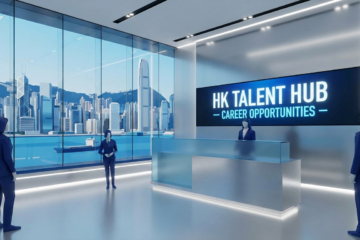
The Liquid Workforce: Leveraging Internal Talent Marketplaces to Reskill Hong Kong
The Liquid Workforce: Leveraging Internal Talent Marketplaces to Reskill Hong Kong
In the high-rise boardrooms of Central and the bustling tech hubs of Kwun Tong, a familiar conversation is taking place. It usually begins with a sigh, followed by a daunting statistic about the current “talent crunch.” For years, Hong Kong has relied on a dynamic inflow of external expertise to fuel its status as a global financial and logistical powerhouse. But as we approach the latter half of the decade, the rules of engagement are shifting.
The “Buy” strategy—hiring expensive external talent to plug skills gaps—is becoming unsustainable. The pool is tighter, the costs are higher, and the shelf-life of technical skills is shorter than ever.
Enter the **Internal Talent Marketplace (ITM)**. It is no longer just a buzzword for Silicon Valley giants; it is fast becoming the survival mechanism for Hong Kong’s forward-thinking enterprises. By 2026, the static organizational chart will be a relic of the past, replaced by a fluid, skills-based ecosystem. Here is how Alpha HR sees the future of work unfolding in the SAR, and how you can prepare.
## The Hong Kong Context: Why Look Inward?
Hong Kong faces a unique “double disruptor.” First, there is the global acceleration of AI and automation, demanding entirely new skill sets. Second, there is the local demographic shift—a combination of an aging workforce and migration outflows.
For HR Directors, this creates a paradox: You have loyal employees who know your company culture intimately but lack the digital fluency required for the next phase of growth. Conversely, you have a market where hiring a mid-level data scientist can cost a premium that shocks the P&L.
An Internal Talent Marketplace solves this by democratizing opportunity. It is a digital platform that uses AI to match employees not just with open full-time roles, but with short-term projects, gigs, mentorships, and learning opportunities within the organization. It turns a rigid hierarchy into a dynamic network.
### From Job Titles to Skill Sets
The core philosophy of an ITM is the deconstruction of the “job.” In the traditional HK corporate structure, an employee is defined by their title (e.g., “Senior Marketing Associate”). In an ITM, they are defined by their skills (e.g., “Content Strategy,” “Project Management,” “Basic Python”). This shift allows an employee in Marketing to pick up a 10-hour “gig” helping the Product team with user research, effectively reskilling them through real-world application.
## 2026 Trends: The Future of Workforce Agility
As we look toward 2026, Alpha HR predicts that the Internal Talent Marketplace will evolve from a “nice-to-have” add-on into the central operating system of the enterprise. Here are the key trends defining the next two years:
### 1. AI-Driven Skill Inferencing
By 2026, manual skills profiles will be obsolete. Advanced ITMs will utilize “skill inferencing.” AI will analyze an employee’s emails, Slack contributions, completed projects, and GitHub repositories to automatically update their skills profile. The system will know an employee is ready for a leadership role before the employee—or their manager—even realizes it.
### 2. The Rise of the “Fractional” Internal Employee
The concept of the “liquid workforce” will mature. We expect to see HK companies embracing a model where employees spend 80% of their time on their core role and 20% on marketplace gigs. This internal “side hustle” culture satisfies the desire for variety among Gen Z talent while solving cross-departmental bottlenecks without external consultants.
### 3. Predictive Reskilling
Instead of reactive hiring, 2026 ITMs will use predictive analytics to forecast skills gaps six months out. If the system detects a company-wide deficit in Generative AI prompting, it will automatically suggest relevant internal gigs and micro-learning courses to employees with adjacent skills (like copywriters or coders).
## Reskilling Through “Gigs”: The Learning-by-Doing Model
The traditional approach to reskilling in Hong Kong has often been academic: send the employee to a two-day workshop and hope the knowledge sticks. The retention rate of this method is notoriously low.
ITMs introduce **contextual learning**.
Imagine “David,” a Relationship Manager at a Kowloon-based bank. He fears his role is being automated. Through the company’s ITM, he sees a “gig” posted by the Digital Transformation team: *Need support testing a new customer service chatbot (5 hours/week).*
David applies. He uses his domain knowledge of customer pain points to improve the bot. In the process, he learns the basics of AI product management. He isn’t just watching a video on digital transformation; he is participating in it. Six months later, David transitions fully into a Product Owner role. The bank retains a loyal employee, saves on recruitment fees, and preserves institutional knowledge.
## Overcoming the “Talent Hoarding” Culture
The technology is the easy part. The challenge for Hong Kong HR leaders is cultural. There is a deep-seated managerial instinct to “hoard” high performers. Managers often fear that if they let their best team members take on internal gigs, productivity will drop, or the employee will be poached by another department.
### Changing the Narrative
To make an ITM work, the C-Suite must incentivize talent sharing.
* **For Managers:** KPIs should include “talent export” metrics. Managers should be rewarded for how many of their team members advance within the company, not just within the specific unit.
* **For Employees:** Participation in the marketplace must be tied to performance reviews and promotion velocity. It must be seen as the fast track to career growth.
## Alpha HR’s Strategic Blueprint for Implementation
Implementing an Internal Talent Marketplace is a journey. Here is how Alpha HR recommends Hong Kong organizations begin:
1. **The Skills Audit:** Before buying software, understand what you have. Map the current skills of your workforce against the strategic goals of 2026.
2. **Start with “Gigs,” Not Jobs:** Don’t just use the marketplace for full-time internal transfers. Start with short-term projects (5-10 hours). This lowers the stakes and encourages adoption.
3. **Democratize Visibility:** Ensure the platform is accessible to everyone, from the mailroom to the boardroom. Hidden talent often lies in the most unexpected places.
4. **Curate the Culture:** Launch internal marketing campaigns celebrating “Internal Movers.” Make heroes out of employees who have reinvented their careers without leaving the company.
## Conclusion: The Agile Future
The era of the “job for life” may be over, but the era of the “career for life” within a single organization is making a comeback—provided that organization is fluid enough to adapt.
For Hong Kong, a city defined by its resilience and ability to pivot, the Internal Talent Marketplace is the natural evolution of work. It turns the threat of a talent shortage into an opportunity for internal renaissance. By unlocking the latent potential of your people, you don’t just fill seats; you build a workforce that is constantly learning, moving, and evolving alongside your business.
The question for 2026 is not “Can we find the talent?” It is “Can we *unlock* the talent we already have?”
—
**Ready to Unlock Your Workforce Potential?**
At **Alpha HR**, we specialize in navigating the complex intersection of technology, culture, and talent strategy. Whether you are looking to implement a cutting-edge Internal Talent Marketplace or need to redesign your reskilling roadmap for 2026, our consultants are ready to guide you.
[Contact Alpha HR Today] to schedule a consultation on Future-Proofing your Hong Kong Workforce.