The Boardroom Bot: Navigating the Ethics of AI Agents in Final Round Interviews (HK Perspective)
The Boardroom Bot: Navigating the Ethics of AI Agents in Final Round Interviews (HK Perspective)
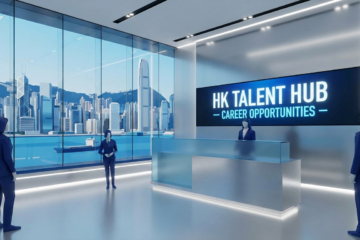
The year is nearing 2026. In a glass-walled meeting room overlooking Victoria Harbour, a candidate sits poised for a final round interview for a C-suite position at a major fintech firm. But across the table, the chair is empty. Instead, a high-definition screen displays a hyper-realistic avatar. This isn’t a pre-recorded video interview; it is an autonomous AI Agent, capable of negotiating salary, analyzing micro-expressions, and making the final hiring decision.
This scenario is no longer the stuff of science fiction. It is the rapidly approaching reality of recruitment in Hong Kong. As the city’s relentless drive for efficiency meets the cutting edge of Generative AI, Alpha HR takes a deep dive into the ethical minefield of replacing human judgment with algorithmic logic in the most crucial stage of hiring: the final round.
The Evolution: From Resume Parsing to Active Interrogation
For the last decade, Applicant Tracking Systems (ATS) have acted as the gatekeepers of the recruitment world, silently filtering resumes based on keywords. However, the shift we are witnessing in late 2025 and moving into 2026 is transformative. We are moving from passive processing to active interrogation.
In Hong Kong’s high-frequency labor market—particularly in banking, logistics, and legal sectors—speed is currency. The allure of AI agents is obvious: they don’t get tired, they don’t have scheduling conflicts, and they can conduct a technical deep-dive in three languages simultaneously. But when an AI agent moves from screening candidates to conducting the final cultural fit assessment, we cross a significant ethical threshold.
The Ethical Minefield of the “Final Round”
The final interview has traditionally been the sanctuary of human intuition. It is where “chemistry,” “leadership presence,” and “cultural fit” are assessed. Delegating this to a machine raises profound questions.
The “Black Box” and Algorithmic Bias in a Multi-Cultural Hub
Hong Kong is a linguistic melting pot. A typical interview might weave seamlessly between English, Cantonese, and Mandarin. While 2026-era Large Language Models (LLMs) are adept at translation, they often struggle with high-context cultural cues.
The ethical danger lies in the data the AI was trained on. If an AI agent has been trained predominantly on Western corporate data, it may penalize a local candidate who displays cultural modesty or avoids direct eye contact—behaviors often associated with respect in Chinese culture—interpreting them instead as a “lack of confidence.”
Furthermore, the “Black Box” problem persists. If an AI agent rejects a candidate in the final round, can it explain why? If the reasoning is buried deep within a neural network, the rejection feels arbitrary and dehumanizing, potentially damaging the employer branding that Hong Kong companies work so hard to build.
The Erosion of the Human Connection (Guanxi)
In Hong Kong, business is built on relationships (Guanxi). The final interview is often the first step in building a mentorship or a collaborative partnership. An AI agent cannot build rapport; it can only simulate it.
When a candidate shares a personal story of overcoming adversity—a common “behavioral” interview question—an AI can analyze the sentiment, but it cannot feel empathy. Using AI for the final hurdle risks creating a sterilized corporate culture where efficiency trumps humanity. Candidates may walk away feeling processed rather than understood.
Data Privacy and the Digital Footprint
With the Hong Kong Personal Data (Privacy) Ordinance (PDPO) tightening its grip, the data collected by AI agents is a liability. By 2026, AI interviews won’t just record audio; they will likely utilize Multimodal Sentiment Analysis.
This technology analyzes pupil dilation, voice modulation, and facial micro-expressions to detect deception or enthusiasm. The ethics of harvesting such intimate biometric data are murky. Is it ethical to analyze a candidate’s subconscious physical reactions without their explicit, informed understanding of how that data will be used? In a city as privacy-conscious as Hong Kong, this could lead to significant legal pushback.
Looking Ahead: 2026 Trends in AI Interviewing
As we look toward the 2026 horizon, the technology is becoming more sophisticated, but so is the regulatory landscape.
The Rise of “explainable AI” (XAI) Mandates
We anticipate that by 2026, global regulations (heavily influenced by the EU AI Act) will ripple into Hong Kong’s compliance frameworks. This will likely result in a “Right to Explanation.” If an AI agent makes a hiring decision, the company must be able to provide a plain-language explanation of the factors that led to that decision. This will force vendors to move away from “black box” models toward “glass box” AI, where the decision-making tree is transparent.
Hybrid Decision-Making Models
The trend is shifting away from autonomous AI toward augmented intelligence. In 2026, the best practice will not be an AI conducting the final interview alone. Instead, the AI will act as a “Co-pilot” during the interview, providing real-time prompts to a human interviewer based on the candidate’s answers, or flagging potential inconsistencies for the human to explore further.
Balancing Tech with Tradition: The Alpha HR Approach
At Alpha HR, we believe that while technology drives the future, people must remain at the wheel. The efficiency of AI agents is undeniable, but the cost of removing the human element from the final round is too high.
We advocate for a Human-in-the-Loop (HITL) framework for our clients in Hong Kong.
- AI for Screening, Humans for Closing: Use AI agents to handle technical assessments and initial behavioral screens where bias can be statistically minimized.
- The “Veto” Power: No candidate should be rejected in a final round solely by an algorithm. A human review must be mandatory for final stage rejections.
- Cultural Calibration: AI tools used in Hong Kong must be specifically calibrated for local cultural nuances, ensuring that “Code-switching” and cultural modesty are not penalized.
Conclusion
The future of recruitment in Hong Kong is undeniably digital, but it must remain essentially human. As AI agents become capable of conducting final round interviews, the question shifts from “Can we do it?” to “Should we do it?”
For Alpha HR, the answer lies in balance. We must harness the analytical power of 2026-era AI to remove unconscious bias and improve efficiency, but we must never abdicate the responsibility of the final handshake—or the final decision—to a machine. In the end, companies hire people, not data points.
Ready to Future-Proof Your Hiring Strategy?
Navigating the intersection of AI technology and human capital is complex. Whether you are looking to integrate advanced recruitment tech or find leaders who understand the future of work, Alpha HR is your strategic partner in Hong Kong.
[Contact Alpha HR Today] – Let’s build a workforce that leverages technology without losing its humanity.