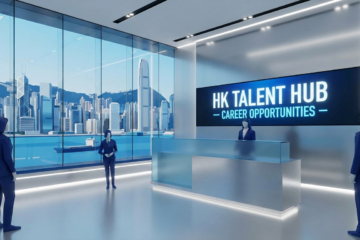
The 2026 Skills Taxonomy: Redefining Core Competencies for Hong Kong Finance
If you walk through the glass towers of Central or the bustling fintech hubs of Cyberport today, the vibration of change is palpable. But project yourself forward just two years. By 2026, the Hong Kong financial landscape will not just be faster; it will be fundamentally different. The era of the siloed “number cruncher” is effectively over.
For HR leaders and executives in Hong Kong, the challenge is no longer just about filling seats; it is about architectural renovation. We are moving from a static job description model to a dynamic **Skills Taxonomy**—a living framework of competencies that blends high-level finance with frontier technology and deep human insight.
At Alpha HR, we are closely monitoring the pulse of the market. Based on emerging trends, regulatory shifts from the HKMA, and the rapid integration of the Greater Bay Area (GBA), here is the essential narrative of the 2026 finance skillset.
## H2: The Great Convergence: Finance Meets Frontier Tech
For years, we spoke of “FinTech” as a sector. By 2026, “Tech” will simply be the operating system of Finance. The barrier between the IT department and the trading desk will have dissolved completely. The core competency here isn’t just coding; it is *fluency*.
### H3: From Data Analysis to AI Orchestrator
In 2026, generative AI and machine learning agents will handle the bulk of traditional financial modeling and risk assessment. The human value add is no longer in building the spreadsheet, but in orchestrating the AI that builds it.
Financial professionals must possess **”AI Governance and Prompt Engineering”** skills. They need to understand the architecture of Large Language Models (LLMs) well enough to detect hallucinations in financial reports. An investment analyst in 2026 doesn’t just analyze market data; they audit the algorithms that curate that data. HR leaders must look for talent that views AI as a teammate, not a tool—candidates who can demonstrate “algorithmic intuition.”
### H3: Virtual Asset and DeFi Literacy
Hong Kong is positioning itself as a premier global hub for virtual assets. By 2026, this will have matured from a speculative niche to a regulated standard.
The modern skills taxonomy must include **Distributed Ledger Technology (DLT) Literacy**. This goes beyond understanding what Bitcoin is. We are talking about the ability to navigate Central Bank Digital Currencies (CBDCs), understand the mechanics of tokenized real-world assets (RWA), and manage compliance within decentralized finance (DeFi) protocols. Your compliance officers and risk managers need to be as comfortable reading a smart contract audit as they are a traditional balance sheet.
## H2: The Green Ledger: ESG as a Hard Skill
Sustainability has graduated from a “nice-to-have” CSR initiative to a rigorous financial metric. With the HKEX pushing for mandatory climate-related disclosures, ESG (Environmental, Social, and Governance) competencies are becoming hard technical skills.
### H3: Carbon Accounting and Impact Measurement
The finance professional of 2026 must be part accountant, part climate scientist. The ability to perform **Scope 3 Emissions Auditing** will be highly prized.
We are seeing a shift where portfolio managers must assess “climate beta”—the risk exposure of assets to climate change events. This requires a taxonomy that includes **Sustainability Reporting Standards (ISSB)** proficiency and Green Finance Framework structuring. If your talent cannot quantify the financial risk of a carbon transition, your firm is flying blind.
## H2: The Human Element: Cognitive and Relational Skills
As AI commoditizes technical execution, the premium on “humanness” skyrockets. However, the soft skills of 2026 are sharper and more specific than the “communication skills” of the past.
### H3: Ethical Judgment in an Automated World
When algorithms execute trades in nanoseconds and approve loans based on thousands of data points, **Ethical Judgment** becomes a critical fail-safe.
We are entering an age where “legal” and “ethical” may diverge due to technological loopholes. HR must prioritize candidates who demonstrate strong moral courage and the ability to navigate grey areas. This is the skill of asking, *”The model says we can do this, but should we?”* This competency is the ultimate risk management tool.
### H3: GBA Cross-Cultural Agility
The integration of the Greater Bay Area is the most significant geopolitical reality for HK finance. By 2026, the flow of capital, people, and data between Hong Kong, Shenzhen, and Guangzhou will be seamless.
The required skill here is **GBA Agility**. This is more than language skills (though Mandarin and Cantonese fluency remains vital). It is a nuance of regulatory bilingualism—understanding the interplay between Hong Kong’s Common Law system and Mainland China’s civil law system. It involves the cultural dexterity to negotiate a deal in Shekou in the morning and present it to international investors in Admiralty in the afternoon.
Building the Taxonomy: A Blueprint for HR Leaders
The winning firms will be those that stop looking for “finance staff” and start building a multi-disciplinary taxonomy of talent. They will merge the precision of AI, the conscience of ESG, and the agility of the GBA context into a cohesive workforce.
At Alpha HR, we specialize in identifying this new breed of talent. We don’t just fill vacancies; we help you construct the human infrastructure required for the future of finance.
Are you ready to build your 2026 workforce?
Contact Alpha HR today to discuss your strategic talent mapping and recruitment needs. Let’s future-proof your business together.
[Get in Touch with Alpha HR]